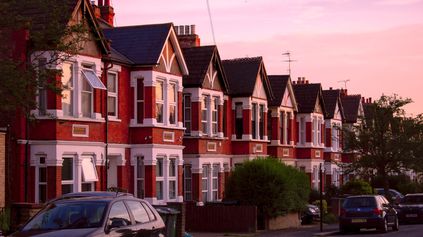


Major reforms targeting unsafe cladding are set to reshape the construction landscape. As part of the Government’s ongoing Remediation Acceleration Plan, the Building Safety (Remediation of Unsafe Cladding etc) Bill will introduce significant changes to how unsafe cladding is identified and remedied, together with new responsibilities and stronger penalties for non-compliance.
Background
Following the Grenfell Tower fire in 2017, the Government has introduced various measures aimed at accelerating the remediation of unsafe buildings, with a wider aim of improving building safety as a whole. Its Remediation Acceleration Plan, published in December 2024, focused on identifying the buildings with unsafe cladding, speeding up remediation and strengthening enforcement measures, all to improve outcomes for affected residents. Forming the next step in this plan, the new Bill received its First Reading in the House of Commons on 14 October 2026.
What will change?
The Bill introduces duties on responsible entities to assess, mitigate and remediate fire safety risks associated with the external walls of multi-occupied residential buildings that exceed 11 metres in height, or comprise at least five storeys. These obligations do not apply where a building's external walls are already subject to developer-led remediation under a Self-Remediation Contract.
A key change is the proposed mandatory use of the PAS 9980 framework for undertaking Fire Risk Appraisals of External Walls (FRAEWs). The intention is to create a greater consistency in how external wall risks are assessed which, in turn, provides greater certainty for building owners, residents and lenders.
The Bill also seeks to tackle the delays caused by disputes over responsibility or inaction by building owners. Regulators, local authorities and designated public bodies will be given enhanced powers to compel compliance and, in certain circumstances, intervene directly to undertake remediation works where these disputes cause lengthy delays.
Greater transparency and stronger enforcement
To improve transparency and oversight, responsible entities subject to a remediation duty will be required to publish a Remediation Compliance Plan within 15 months of Royal Assent, setting out the steps and anticipated timescales for remediation. The Bill also provides for a register of medium-rise residential buildings and enhanced requirements to keep residents informed of remedial works progress.
Importantly, the duty to remediate will only be discharged once the relevant fire safety risk has been eliminated or reduced to a tolerable level. The precise meaning of "tolerable" will be prescribed by regulations. Simply decanting a building or implementing interim measures (e.g. a waking watch) will not be enough.
Failing to comply could result in significant consequences including criminal prosecution, unlimited fines and/or imprisonment and/or a civil financial penalty of up to £500,000. Directors and senior managers may also face personal liability where an offence occurs with their consent, involvement, or neglect.
The Bill also strengthens cost recovery mechanisms, including through payment notices, diversion of ground rent, court enforcement and charges over property.
What does this mean in practice?
Overall, the Bill signals a continued shift towards a more robust regulatory framework that builds upon the obligations already established under existing legislation. For building owners and others with responsibility for remedial works, the proposed changes make it important to understand who bears responsibility for remediating a building, what remedial works are required and whether progress can be made within the required timescales. Clearly, failure to do so may result in notable civil and criminal penalties.
The detail will depend on the final form of the Bill and any supporting regulations; however, the direction of travel is clear – allowing remedial works to stall while responsibility or funding is disputed is becoming increasingly difficult.
The Bill will now continue through Parliament following its Second Reading on 27 October 2026.
A link to read the Bill in full and track its progress can be found here.